
Buying Guide
Power and speaker matching
Look past the big watt numbers and focus on usable power and how it pairs with your speakers. Aim for an amplifier whose continuous (RMS) power is equal to or slightly higher than your speakers’ recommended range to avoid clipping. Consider speaker impedance (4 Ω vs 8 Ω) and sensitivity — lower-sensitivity speakers need more amplifier power for the same loudness.
- Check whether an amp specifies continuous/RMS power at 8 Ω or 4 Ω — compare like for like.
- Allow headroom: an amp with a bit more clean power reduces distortion at high volumes.
- For outdoor or large-room setups, prioritize amps with higher continuous output and good cooling. For more on high-output models, see our best power amplifiers.
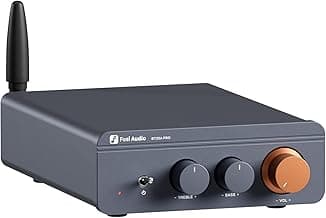
For a compact but powerful example, consider the Fosi Audio BT20A Pro, which uses a TPA3255 class‑D stage and lists higher channel output for demanding speakers while still offering tone controls for basic matching.
Inputs, outputs and connectivity
Match the amp’s inputs to your source devices and future plans. Common needs include Bluetooth for phones, optical/USB for TVs and DAC-capable sources, a phono input for turntables, and a pre‑out/subwoofer output if you plan to add an active subwoofer. Balanced inputs (XLR or TRS) are valuable if you’ll connect studio or pro gear.
- Bluetooth: convenient for casual listening; check codec support if you care about quality.
- Digital inputs (USB/optical/coax): useful if you source hi‑res files or stream from a TV.
- Phono preamp: essential if you own a turntable without a built‑in preamp.
If you want a beginner‑friendly integrated amp with modern connectivity and a built‑in DAC, the Denon PMA-600NE is an example that bundles Bluetooth, a DAC and a phono preamp into one package.
Features, tone controls and expandability
Decide which controls and extras matter to you: simple bass/treble knobs can tame room issues, while a dedicated tone defeat or analog mode preserves a purist signal path. If you plan to expand later, look for pre‑outs, preamp outputs, or a dedicated subwoofer output. Built‑in DACs and digital meters can be useful convenience features, but aren’t strictly necessary if you already have a separate DAC or processor.
- Tone controls: good for correcting room acoustics or personal preference.
- Pre-outs/sub-out: enables adding powered subwoofers or using the amp as a power stage later.
- Built‑in DAC and digital inputs: streamline connection to TVs and computers.
For a feature-rich value choice with multiple digital inputs, balanced connections and a visible VU meter, the AIYIMA A80 is an example of an amp that blends modern I/O with tonal controls and pre‑out flexibility.
Size, cooling and installation considerations
Think about where the amp will live. Compact class‑D amps are energy efficient and run cooler, so they’re suited to bookshelves and small cabinets. Larger class‑AB designs can be heavier and require more ventilation. Allow a few inches of clearance above and behind the unit for airflow, and avoid stacking other heat‑producing components directly on top.
- If you plan to rack‑mount, verify rack‑space compatibility and ventilation requirements.
- For outdoor or non‑airconditioned rooms, prioritize amps with good thermal design and protective circuits.
- Weight and footprint matter if you’ll move the system often — mini amplifiers win on portability.
Budget, reliability and use-case matching
Choose an amp that fits your primary use case rather than the lowest price. A small desktop amp can be perfect for near‑field listening, while a more robust integrated amp or receiver is better for living rooms, home theater fronts, or multiroom setups. Consider warranty, manufacturer support and user reviews when evaluating long‑term reliability.
- Define your primary use: desktop, living‑room stereo, home theater front stage, karaoke, or commercial/zone use.
- Factor in speakers and accessories — a cheaper amp may force upgrades elsewhere to get the sound you want.
- Read recent user reviews and verify return policy or warranty before buying.
If price is a priority, check our best budget stereo amplifiers guide to compare compact, value-oriented models and pick the one that fits your use case. Quick checklist before you buy: confirm speaker impedance and power needs, verify the inputs you actually use, ensure space and ventilation are adequate, and pick an amp with the reliability and service/support that match how often you’ll use it.
FAQ
Which are the best stereo amplifiers for home use?
Look for an amplifier that matches your speakers, has the inputs you need, and fits your listening habits — whether that’s compact Class D power for small rooms or a fuller integrated amp for dedicated listening. For a balanced combination of compact size and power handling, the Fosi Audio BT20A Pro is a popular all-around choice thanks to its Bluetooth and tone controls. If you want more features or a built-in DAC, consider mid-range integrated amps that prioritize connectivity and sound quality. See also our best amplifiers roundup for more options. Read reviews and verify warranty/support before buying to ensure long-term satisfaction.
Do I need a DAC or phono preamp with a stereo amplifier?
If you stream from phones or use digital sources, a DAC improves clarity compared with an analog-only amp; many modern amplifiers include a basic DAC, but separate units can offer higher performance. If you plan to connect a turntable, you'll need a phono preamp unless the amp explicitly includes one — some integrated amps aimed at beginners include phono inputs and a built-in preamp. Check the amplifier’s input list before you buy so you don’t need extra boxes. Choosing an amp with the right built-in features can save space and reduce setup complexity.
What features should I look for in a budget stereo amplifier?
Prioritize reliable power output, solid build quality, basic tone control, and the inputs you use most often (Bluetooth or RCA). A compact Class D amp often gives the best price-to-performance ratio for casual listening and small rooms. For a straightforward, affordable option that covers those bases, the Fosi Audio V1.0G is frequently recommended by buyers. Also check user reviews for thermal behavior and long-term reliability before committing.
How much power do I need from a stereo amplifier for bookshelf speakers?
Match amp power to your speakers’ recommended range and your typical listening volume—bookshelf speakers often perform well with amps in the 20–100W-per-channel range depending on sensitivity. If you’re also shopping for speakers, our best budget loud speakers list can help you find models that pair well with compact amplifiers. It’s better to have a bit more clean headroom than to run an amp at its limits, which can cause distortion. If you want higher build quality and features like better tone controls or a robust power supply, consider stepping up to a reputable integrated amp from established audio brands. Always pair the amp’s impedance rating with your speakers to avoid mismatches.
Can I use a Bluetooth stereo amplifier for a wired speaker setup?
Yes — Bluetooth amplifiers typically accept wireless input alongside traditional wired sources, so you can run passive speakers via speaker outputs while using Bluetooth for streaming. Keep in mind Bluetooth adds a wireless link layer that can affect audio resolution and introduce slight latency compared with wired connections, so use the wired input for critical listening. Many compact Bluetooth amps also include analog inputs and tone controls to handle mixed setups. If you need both convenience and quality, choose an amp with a decent onboard DAC and multiple input options to cover wired and wireless sources.
Final Verdict
Across our tests the strongest stereo amplifiers stood out by delivering clean, consistent power, low noise, and flexible inputs; weaker options sacrificed build quality or connectivity for price. Prioritize usable power at your speaker impedance, low distortion/noise, and the inputs you actually need (Bluetooth or digital). The best performers combined robust power stages, straightforward tone control, and solid DAC/Bluetooth implementations—practical strengths that produce clearer, fuller sound in real rooms.
For a wider comparison of designs and classes, see our best audio amplifiers guide.
🏆 Best Overall: Fosi Audio BT20A Pro TPA3255 Bluetooth 2-Channel Amp
💰 Best Budget: Fosi Audio V1.0G TPA3116 2-Channel Class D Mini Amp
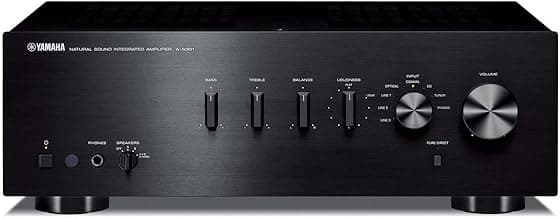
⭐ Best Premium: Yamaha A-S301 Integrated Stereo Amplifier