
Buying Guide
Cleaning performance: suction, mop type, and adjustable settings
Hardwood floors need a balance of suction to pick up dust and debris and a gentle, controlled mopping action to avoid over-wetting. Look for models that let you adjust suction and water flow independently so you can use higher suction for dirt and lower water output for delicate finishes. For product comparisons that focus on suction and mopping options, see best robot vacuums with mop.
- What to check: maximum suction rating (higher for embedded dirt), mop type (spinning pad vs. damp microfiber), and separate settings for vacuum and mop.
- Tip: Spinning mops and heated auto-wash docks can remove stubborn grime but still allow precise water control for wood.
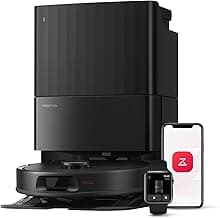
- Example: if you want a high-suction, self-cleaning mop system, consider the roborock Qrevo S Pro, which combines strong suction with a heated mop-cleaning dock.
Navigation, mapping and floor-safety features
Accurate navigation keeps a robot from repeatedly wetting the same spot or missing edges. LiDAR, SLAM mapping, and reliable obstacle avoidance matter for consistent coverage. Equally important for hardwood is carpet detection or mop-lift features so the robot won’t drag a wet pad onto rugs. For options with advanced mapping, consult best smart robot vacuums.
- What to check: mapping accuracy, virtual no-go zones, carpet-detection or automatic mop lift, and obstacle recognition.
- Why it matters: good mapping reduces duplicates and wet patches; mop-lift prevents water damage on carpets and thresholds.
- Example: entry-level users who want dependable LiDAR mapping should look at the roborock Q7 M5+, which advertises PreciSense LiDAR navigation and carpet detection to protect floors.
Brush design, anti-tangle systems and pet hair handling
Brushes and anti-tangle features are especially important if you have pets. Flexible or zero-tangle rollers and specialized edge cleaners keep hair from wrapping around axles, which reduces maintenance and prevents scratching from trapped debris. If you need both strong vacuuming and tangle-free mopping, check best robot vacuum mop combos.
- What to check: anti-tangle brushes, dedicated rubber rollers, and edge/side-brush designs for corners.
- Maintenance tip: choose models whose brushes are easy to remove and inspect—this saves time for routine cleaning on hardwoods.
- Example: for advanced anti-tangle tech and strong carpet/fur performance, consider the roborock Qrevo S5V, which highlights a dual zero-tangle system.
Docking, self-emptying, and mop washing/drying
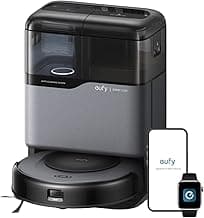
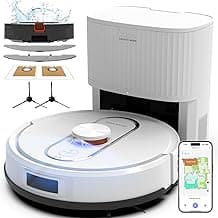
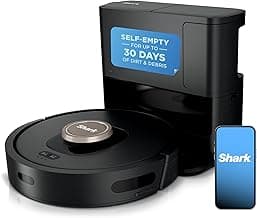
A docking station that self-empties and washes or dries mop pads greatly reduces hands-on maintenance and helps keep hardwood-friendly mop pads sanitary. Consider dustbin capacity, water-tank refills, and whether the dock dries pads (to prevent mildew). Models with built-in cleaning docks are collected in our best self washing robot vacuums guide.
- What to check: self-empty frequency, auto mop wash/dry, and how often consumables (bags, filters, pads) need replacing.
- Why it matters: regular drying prevents odors and bacteria; larger bins mean fewer trips to the trash for busy households.
- Example: if auto washing and drying are priorities, the ECOVACS DEEBOT T50 Omni is an option that combines self-emptying with auto mop wash/dry features.
Battery life, noise, app control and multi-floor use
Battery runtime and recharge behavior affect how well a robot covers larger hardwood areas. Noise levels matter in open-plan homes. Look for reliable app control with multi-floor mapping, scheduling, and zone-specific cleaning so you can tailor runs to different rooms and finishes.
- What to check: claimed runtime, return-to-dock recharge strategies, dB ratings (if provided), and the app’s mapping and scheduling features.
- Practical advice: for multi-floor homes, ensure the robot supports multiple saved maps and that the app lets you set room-by-room water and suction levels to protect more sensitive surfaces.
- Bonus: voice assistant compatibility (Alexa, Google) is useful for quick starts, but the app usually provides the most precise controls for hardwood care.
FAQ
Which robot mop and vacuum is best for hardwood floors?
The best choice balances strong suction with a gentle, controllable mopping system so you don’t over-wet the wood. For an all-around option that emphasizes both power and mop care, consider the Roborock Qrevo S Pro, which pairs high suction with a liftable spinning mop and self-cleaning dock. Look for models that let you adjust water flow and lift the mop when the robot detects carpet. Also prioritize reliable navigation so the robot avoids repeated wetting in the same spot.
Will a robot vacuum scratch my hardwood floors?
Most modern robot vacuums are designed with soft bumpers and rubber wheels to avoid scratching finished hardwood. Scratches usually come from trapped grit, hard debris, or damaged wheels, so keep your floors swept of sand and check the rollers and wheels regularly. Avoid running a robot with missing or hard-bristled brushes, and remove abrasive objects like coins or clips from the floor before cleaning. If you have delicate or unfinished wood, run the robot on a lower-suction setting and test in an inconspicuous area first.
What features matter most for a robot mop that will be used on hardwood?
Key features are adjustable water flow, a mop-lift or carpet-detection to prevent wetting rugs, gentle mop pads, and reliable mapping so the robot avoids oversaturating a single area. Good suction with a separate mopping mode helps remove dry debris before mopping, and anti-tangle brushes reduce hair build-up that can drag moisture across floors. If you want a budget-friendly pick that still covers these bases, the Roborock Saros 10R offers strong suction plus zero-tangle design and self-emptying in a slim profile. Our best budget robot vacuums roundup highlights similar low-cost options. Finally, choose a model with easy-to-clean pads and clear maintenance instructions.
How often should I run a robot mop on hardwood floors?
Frequency depends on traffic: high-traffic kitchens might benefit from daily light mopping, while living rooms can often be done once or twice a week. For regular maintenance, running vacuuming cycles several times weekly and a dedicated mopping cycle once a week keeps dirt from building up. Reduce frequency if your floors are sensitive to moisture, and always let floors dry fully between runs. Emptying the dust bin and rinsing mop pads after each wet cycle helps keep the robot effective and hygienic.
Are self-emptying docks worth it for hardwood floor owners?
Self-emptying docks add convenience by reducing how often you handle dust and can be especially helpful in homes with pets or lots of foot traffic. They don’t directly affect floor finish, but they keep the robot running efficiently so it cleans more consistently without frequent interruptions. Consider ongoing costs for bags or filters and the extra floor space the dock requires, but many owners find the trade-off worthwhile for less maintenance. If you want a beginner-friendly self-emptying option, the Roborock Q7 M5+ is commonly recommended for straightforward setup and long empty intervals.
Final Verdict
After comparing the top robot vacuums for hardwood floors, the strongest products stood out for reliable suction, dependable mop wash/dry docks, and navigation that prevents scuffs and repeat passes. Prioritize suction appropriate for fine dust, mop-lift or auto-dry systems to protect wood, anti-tangle brushes for pet hair, and precise mapping or LiDAR for consistent coverage. The best-performing models all combined dependable docking (self-clean or empty), predictable obstacle avoidance, and balanced suction-to-mop performance that cleaned edges without saturating hardwood.
🏆 Best Overall: roborock Qrevo S Pro — 18,500Pa vacuum & mop, self-cleaning dock
💰 Best Budget: roborock Saros 10R — 22,000Pa vacuum & self-empty mop
⭐ Best Premium: roborock Qrevo S5V — 12,000Pa vacuum & edge mopping