
Buying Guide
Mounting and rail compatibility
Before you buy, check how the light attaches to your handgun. Most non-recoil lights and laser units are designed for Picatinny or Glock-style slide rails, while some use a sliding clamp or removable rail adapter. For comparisons across form factors, see best light guns. If you plan to move the light between pistols, look for a low-profile mount and easy removal tools.
- Confirm rail type (Picatinny, Glock, or proprietary slide mount).
- Check whether the unit requires tools to install or has a quick-release/slidable mount for fast swapping.
- Consider back-to-back fitment with sights and holsters—some mounts change the sight picture or require different holster cuts.
Example: the EZshoot 800 Lumens Pistol Light is marketed with a slidable rail design intended to fit Glock and Picatinny setups, which can simplify cross-platform mounting.
Brightness, beam color and light modes
Lumens tell you output, but beam pattern and color matter more for role and target identification. A focused spot reaches farther; a wider flood helps close-range room clearing. Colored lasers (green, red, blue) and IR/UV options are useful for specific tasks like low-light identification or training with night-vision systems. Strobe modes can disorient an aggressor but also reveal your position. If you need options that are built to handle recoil or integrate with live-fire platforms, see best recoil light guns.
- Choose lumen output based on typical engagement distance (higher for outdoor/longer ranges, moderate for indoor/home defense).
- Decide if a visible laser or IR laser for NV use is required.
- Use strobe sparingly—handheld exposure can be disabling for both user and threat.
For a multi-beam example, consider the SOLOFISH 500lm Pistol Light, which combines visible and IR/colored beam options in one package for flexible use cases.
Power, runtime and charging
Battery type and charging method directly affect how often you’ll need to recharge and how reliable the light is in extended use. Built-in rechargeable cells with USB-C charging are convenient, but verify stated runtimes and whether the battery is user-replaceable. If you need long duty cycles, look for higher-capacity batteries or models that accept standard cells so you can carry spares.
- Check manufacturer runtime at different brightness levels (high vs low vs strobe).
- Prefer USB-C or standard charging cables for field-replaceable convenience. For models emphasizing integrated charging and battery life, see best usb light guns.
- Consider whether the battery is internal (lighter, sealed) or user-swappable (easier to sustain in long operations).
Controls, activation methods and safety features
How you activate the light under stress matters. Ambidextrous switches, tailcaps, and optional pressure/remote switches give flexibility for different grips and shooting positions. Remote/pressure switches and compatible controllers are covered in best light gun controllers. Look for tactile feedback so you can operate by feel, and consider lockout functions to prevent accidental activation in a holster.
- Decide between momentary-on pressure switches and constant-on switches for your use style.
- Verify ambidextrous layouts if you shoot left-handed or switch shoulders.
- Look for lock modes or mechanical covers to avoid accidental battery drain.
Durability, size and training options
Durability includes impact resistance, water resistance, and how a unit handles recoil and repeated use. For carry or duty use, prioritize compact designs with robust housings and reputable mounting hardware. If your primary goal is recoil-free training rather than fielded use, a dedicated simulator gives safe, repeatable feedback without live fire. For PC-based trainers and simulation hardware, check best pc light guns.
- Check housing material (aircraft aluminum or polymer) and advertised IP/water resistance ratings.
- Compare footprint and weight—smaller units fit more holsters and change balance less.
- If you’re learning fundamentals or doing dry-fire practice, a non-projectile simulator can be a better choice than a live-weapon-mounted light.
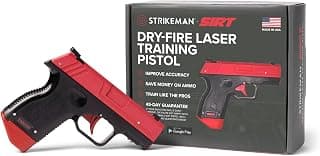
For structured, recoil-free training, the Recoil Enabled Training Laser Device is an example of a product designed specifically for interactive, non-projectile drills and speed/accuracy practice.
FAQ
What are non recoil light guns and how do they differ from regular firearms?
Non‑recoil light guns typically refer to weapon lights, laser trainers, or simulation devices that don’t fire projectiles; they add illumination or an aiming point without producing ballistic recoil. Weapon lights mount to a firearm’s rail and help you identify targets in low light, while training lasers and simulators let you practice draw and trigger control safely. These tools are used for target identification, low‑light shooting practice, and dry‑fire training rather than as standalone offensive weapons. Always follow safe handling rules and understand the device’s intended use before adding it to your setup.
Are non recoil light guns legal for home defense?
Most weapon lights and laser attachments are legal to own and use for home defense, but laws vary by jurisdiction—especially rules covering high‑power lasers or modifications. For many people a dedicated weapon light is a practical addition; for example, the SOLOFISH 500lm Pistol Light is a popular all‑around option for identifying threats in low light. Avoid using laser pointers in ways that violate local laser or nuisance laws, and never point any laser at people or vehicles indiscriminately. When in doubt, check local regulations and consult a firearms instructor about safe home‑defense tactics.
How do I mount a pistol light to a Glock or Picatinny rail?
First confirm the light’s compatibility with your slide or Picatinny rail and read the manufacturer’s mounting instructions. Generally you slide the unit into the rail slot, align the indexing lug, then tighten the clamp or screws until the light sits securely without shifting. After mounting, function‑check the activation method and do a short live‑fire or dry‑fire check to confirm retention and zero if the device has a laser. Lightweight, slide‑compatible options like the EZshoot 800 Lumen Pistol Light are designed for easy fitment on common rails.
Which non recoil light gun is best for beginners learning to shoot?
Beginners often benefit most from non‑projectile trainers and simple weapon lights that let them focus on fundamentals without live‑fire complexity. A dedicated training device like the Recoil Enabled Training Laser Device is marketed toward novices for interactive drills and dry practice. Pairing that kind of trainer with basic instruction on sight alignment, trigger control, and safety will speed progress while keeping range time efficient. Also consider starting with a reliable weapon light if your priority is low‑light awareness rather than marksmanship practice.
How long do rechargeable pistol lights last on a single charge?
Runtime varies widely based on lumen output, whether the laser or strobe is used, and the light’s battery capacity; high‑output modes drain batteries much faster than low or tactical modes. Rechargeable units often advertise multiple hours on low settings and shorter runs on max output, so check the manufacturer specs for real‑world figures. Budget rechargeable examples with integrated batteries—such as the TOUGHSOUL 1200 Lumens Pistol Light—make charging convenient but still benefit from carrying a backup charger or power bank. To maximize runtime, store the light charged, use lower output modes for routine use, and follow the maker’s charging recommendations.
Final Verdict
After testing the field of non-recoil light guns, the strongest models stood out for secure rail fit, dependable laser alignment, clear high-output beams and simple rechargeability — not flashy specs. Buyers should prioritize consistent beam/laser accuracy, rail compatibility with your handgun, durable mounting and intuitive controls. The best-performing models shared solid construction, repeatable sighting and straightforward on/off/toggle controls that make real-world use and target acquisition fast and reliable.
🏆 Best Overall: SOLOFISH 500lm Pistol Light Purple/IR/Green/Blue Beam Combo
💰 Best Budget: TOUGHSOUL 1200 Lumens Picatinny Rail Pistol Light Green Laser
⭐ Best Premium: EZshoot 1000 Lumens Pistol Light Blue Laser Rechargeable