
Buying Guide
How loud do you need it? Power, drivers and perceived volume
“Loud” is more than a single number. Look at wattage, but also pay attention to driver size, number of drivers and any passive radiators—those affect how a speaker moves air and how it sounds at high volume. If you need a speaker for open-air use or large gatherings, check published dB figures or user reviews mentioning max volume instead of relying on watts alone. If you'll pair passive speakers or need extra headroom for big venues, consider whether external amplification is appropriate and consult our best amplifiers guide for compatible options.
- Wattage/peak vs. RMS: RMS gives a better idea of sustained output; peak/“max” wattage is often marketing.
- Driver configuration: Multiple drivers and dedicated subwoofers/ passive radiators help maintain clarity at high volume.
- Real-world example: the Turtlebox Ranger lists a very high max output (useful as a loud portable reference) — but check how it performs outdoors in reviews.
Battery life, charging and portability
Long playtime matters if you’ll use the speaker away from power. Manufacturers often list idealized hours, so consider how loud you’ll actually play it—higher volumes drain battery faster. Also note charging type (USB-C is faster and more convenient) and whether the speaker doubles as a powerbank for phones. For options that balance runtime and size, see our best portable loud speakers roundup.
- Compare playtime at medium listening levels rather than the maximum claimed hours.
- Look for USB-C charging and fast-charge support if you need quick top-ups.
- Example to consider: the compact Anker Soundcore 2 balances long claimed playtime with lightweight portability for everyday use.
Durability and water resistance
Where you plan to use the speaker determines the level of ruggedness you need. IPX6 handles heavy splashes while IPX7 is fully waterproof and often floatable—important for pool or beach use. For jobsite or travel use, also consider shock resistance, grills that protect drivers, and whether the speaker has a secure handle or strap. If you want rugged but affordable models, check our best budget loud speakers guide for durable picks that won’t break the bank.
- IPX6 vs IPX7: IPX7 survives immersion; IPX6 resists high-pressure water jets but not full submersion.
- Floatable designs and reinforced housing reduce risk at pools, beaches and on boats.
- For rough environments, look for rubberized exteriors and recessed controls to prevent damage.
Connectivity and useful extras
Basic Bluetooth is fine for most, but newer versions (Bluetooth 5+) give more stable connections and longer range. Useful extras include TWS pairing for stereo, auxiliary/line-in and TF/microSD slots for offline playback, built-in microphones for calls, and companion apps with EQ presets. If you need a speaker that doubles as a power source or offers advanced sound modes, check those features specifically. For models focused on Bluetooth features and compatibility, see our best bluetooth loud speakers picks.
- Bluetooth version and multi-device pairing: important for reliability in crowded environments. For dedicated connectivity-focused choices, check our best wireless loud speakers guide.
- TWS/stereo pairing if you plan to combine two units for wider sound.
- Feature example: professionals or power users may prefer options like a built-in powerbank and advanced sound boosting—consider the JBL Charge 6 when those extras matter.
Size, weight and choosing for your use case
Match size and weight to how you’ll use the speaker. Compact models are best for backpacks and day trips; larger boombox-style speakers deliver more low-end and longer reach for parties but are heavier and less portable. Think about whether you want wheels/telescopic handles for events, or a lightweight, rugged design for hiking and jobsite use.
- For daily portable use, prioritize small footprint and light weight over absolute loudness.
- For parties and events, prioritize driver count, low-end performance and battery at higher volumes.
- Consider practical extras like handles, straps or wheels depending on how often you’ll move the speaker.
FAQ
What should I look for when buying the best loud speakers?
Focus on three core areas: loudness and speaker size (bigger drivers usually mean more volume), battery life if you need portability, and durability or waterproofing for outdoor use. Check connection options—Bluetooth version, aux input, and whether it supports pairing with a second speaker. Look for simple controls and an app or EQ if you want to tune the sound. Finally, balance features with budget; a well-reviewed midrange model often beats an underpowered expensive unit.
Which loud speaker is best for outdoor parties?
For outdoor parties you want a speaker with strong output, room-filling bass, and easy transport—wheels or a handle help a lot. The JBL PartyBox Stage 320 is built for that use, with a telescopic handle, sturdy wheels, a lightshow, and splashproof protection. Look for long playtime and high peak output if you’ll run a full evening of music. Also consider microphone or instrument inputs if you plan to host karaoke or live performances.
Are waterproof loud speakers worth it for pool and beach use?
Yes—waterproof speakers add peace of mind around pools, boats, and sandy beaches where splashes and light submersion happen. An IPX7 rating or floatable design is ideal because it handles immersion and accidental drops in water. If you want a dependable, all-around pick consider the Anker Soundcore 2, which combines good battery life and IPX7 protection. Even with waterproofing, rinse and dry the unit after salty or sandy environments to preserve controls and ports.
How loud is loud enough for a backyard or small venue?
For backyard gatherings or a small venue you typically want clear sound that fills 50–100 people without distortion, so prioritize headroom over sheer peak numbers. Look for speakers designed to play clean at moderate-to-high volumes and models that tout strong bass radiators or subwoofers for fuller sound. If you need extra volume for bigger outdoor spaces, rugged options like the Turtlebox Ranger advertise very high output and are made for loud, portable use. Always test at the volume you expect to use so you can judge clarity and distortion firsthand.
Can I pair multiple loud speakers for true stereo or bigger sound?
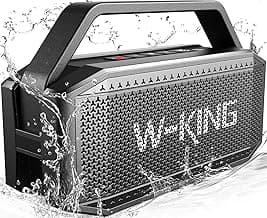
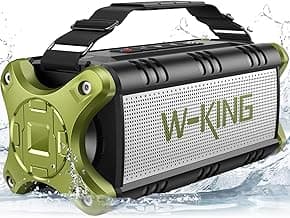
Yes—many modern portable speakers support TWS (true wireless stereo) or proprietary pairing modes to link two or more units for wider soundstage or added volume. Check the product specs for “pairing” or “TWS” support and follow the manufacturer pairing steps, because some brands limit pairing to identical models. For budget-friendly pairing that’s designed for parties, the W-KING Loud supports dual pairing and multiple-device playback. Remember synced speakers will use more battery, so factor charging or runtime into your setup.
Final Verdict
After extensive comparisons the strongest loud speakers stood out for a balanced combination of clear high output, controlled bass, long battery life and rugged, water-resistant design — not just raw loudness. Buyers should prioritize measured loudness with low distortion, reliable battery/runtime, IPX rating and useful connectivity (AUX/USB/TWS). The best-performing models shared focused driver tuning, sturdy enclosures and consistent playtime under heavy use, which delivers reliable real-world volume and punch.
🏆 Best Overall: Anker Soundcore 2 Portable Bluetooth Speaker — BassUp, IPX7, 24H
💰 Best Budget: W-KING Loud 100W Portable Bluetooth Speaker — 60W Bass, IPX6
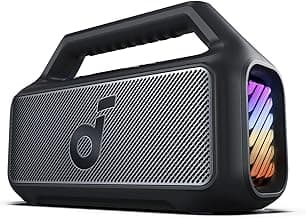
⭐ Best Premium: Soundcore Boom 2 By Anker — 80W Outdoor Speaker, Subwoofer, IPX7