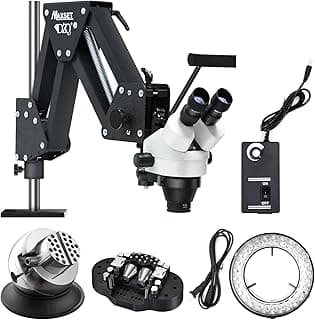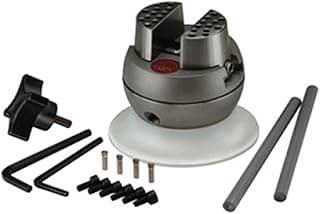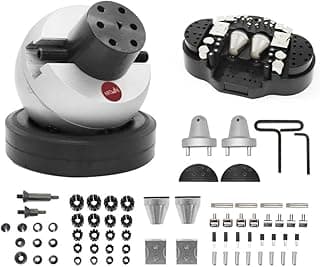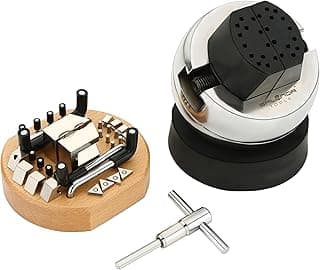

Buying Guide
Size and jaw capacity
Pick a vise size that matches the work you do. Larger 4–5" ball vises give more reach and can hold bigger rings or small casting parts, while 2.5–3" vises are lighter, take up less bench space and are easier to rotate for fine detail work.
- Consider the maximum jaw opening and whether the jaws accept ring clamps or pro‑style jaws.
- If you frequently set larger stones or work on thick pieces, choose a larger model with a wider throat.
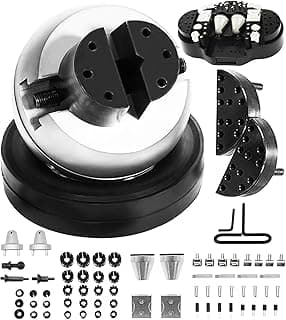
- For an example of a larger, all‑purpose option, see the DZQ 5" Ball Vise.
Rotation, locking mechanism and stability
360° rotation is standard on most jewelers' ball vises, but the quality of the rotation and the locking system varies. If rotation performance is a top priority, check our roundup of best 360 degree ball vises. Smooth, indexed rotation helps you reorient work quickly; a positive, secure lock keeps highly detailed work from shifting. See our best rotating ball vises picks for models with robust locking.
- Look for a coarse lock for rough positioning and a fine lock (or knurled thumbscrew) for final clamping.
- A heavy, well‑machined base reduces vibration and keeps the vise steady during engraving or setting.
- Test how easily the ball rotates when loaded—too loose and the setup will drift, too stiff and it becomes fiddly to adjust.
Attachments, pin plates and included accessories
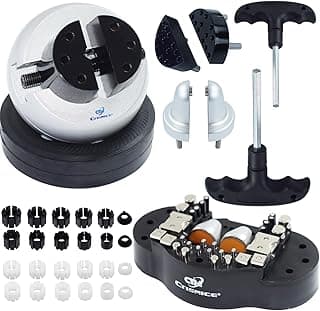
The number and variety of pin plates, jaws, and ring clamps that come with a vise can save money and time. More plates and pins give you flexibility for odd shapes and repeatable setups. If you work mainly with gemstones, our best ball vises for stone setting guide highlights vises and accessories suited for setting.
- Common useful accessories: multiple pin plates, pro ring clamps, adjustable jaws, and spare pins of different diameters.
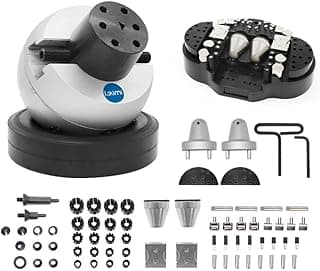
- If you want a kit with a large selection of plates and pins, consider the VEVOR 70‑Piece Ball Vise for broader compatibility.
- Think about which accessories you’ll actually use—extra plates are only valuable if they solve a typical setup problem you face.
Build quality, materials and mounting options
Solid construction and quality finishes prolong tool life and improve precision. Hardened steel jaws or chrome plating resist wear and corrosion, while a flat, heavy base or bolt holes let you secure the vise to the bench.
- Inspect machining tolerances and the finish on components—tight fits and smooth threads are signs of attention to detail.
- Consider whether you need a removable base, bench‑mount holes, or a swivel clamp if you work on different benches or use a portable setup.
- Higher‑end vises often use better alloys and tighter tolerances, which matter most for repetitive professional work.
Ergonomics, precision and use case
Match the vise to your skill level and primary tasks. Hobbyists and beginners usually benefit from straightforward, easy‑to‑adjust models; professionals often prefer heavy, feature‑rich vises with extras for repeatable setups.
- If you’re a bench beginner, prioritize ease of use, a stable base and clear jaw options to reduce setup time.
- For professional shop use, look for models with replaceable jaws, precise locking, and enough accessories to handle diverse pieces.
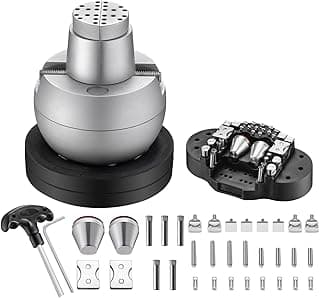
- A strong example for professional users is the CTISMICE 5" Pro Ball Vise, which emphasizes professional‑grade fittings and accessories.
FAQ
What should I look for when buying the best jeweler's ball vise?
Look for smooth 360° rotation and a solid locking mechanism so you can position work precisely. Choose the size and weight that match your projects — smaller vises suit fine stone work while larger ones handle heavier rings. Check how many pin plates, jaw inserts, and ring clamps come in the kit because those attachments determine versatility. Build quality matters: hardened steel or anodized aluminum parts last longer and resist slipping under pressure. Finally, read reviews for consistent tolerances and easy-to-use adjustments and favor models that include spare plates or extra clamps.
Is a 3-inch or 5-inch ball vise better for jewelry work?
For delicate engraving and small stone work a 3-inch ball vise gives better fingertip control and fits compact benches. A 5-inch vise offers a larger clamping surface and more stability for ring shanks and heavier tasks, so it’s better if you work on a wider range of pieces. If you want a single tool that covers most jobs, a sturdy 5-inch example like the DZQ 5-inch Ball Vise provides extra reach without sacrificing rotation. Remember that larger vises weigh more and need secure mounting to avoid bench movement.
Can I use a ball vise for stone setting and engraving?
Yes — ball vises were designed for small-scale tasks like stone setting and hand engraving because they offer full rotation and fine positioning. Using the right pin plates, ring clamps, and jaw inserts keeps stones and delicate pieces stable while you set or engrave. Many kits include multiple attachments to hold different shapes; if yours doesn’t, you can buy additional pin plates separately. For engraving-specific setups see best jewelry engraving ball vises. For very fine engraving pair the vise with a steady lamp or magnifier to reduce hand fatigue and improve accuracy.
How do I mount and secure a ball vise to my workbench?
Most jeweler’s ball vises can be bolted through the base, clamped with a C-clamp, or mounted to a wooden or metal base plate for permanent installation. If you bolt it down, use flat washers and lock nuts to keep the base from rotating under torque. For temporary setups a heavy-duty C-clamp or double-sided mounting tape can work, but check frequently for slippage. Tighten the central locking nut and make small adjustments to the jaws and pins before starting to ensure the piece sits perfectly level.
Which ball vise is best for beginners on a budget?
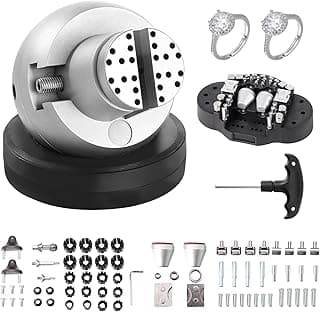
If you’re starting out and watching cost, a well-equipped 3-inch kit gives the features you need without a big investment. The VEVOR 3-inch Ball Vise is a solid budget option that ships with multiple pin plates and basic clamps suitable for most beginner projects. Look for a kit with at least 20–30 attachments so you can hold rings, small flat pieces, and odd shapes without buying extras right away. Practice setup and try holding scrap metal first to learn safe clamping and positioning before working on valuable stones.
Final Verdict
Across our tests the strongest ball vises stood out for solid build quality, a precise 360° rotation, and a generous set of pin plates and jaws that deliver secure, repeatable holds. Weaker options skimped on materials or accessory variety and showed slippage or limited setups. Prioritize jaw versatility, rotation smoothness, overall diameter (3" vs 5"), and the number of included attachments. The top performers combined heavy, well-finished construction with smooth indexing and enough pins/clamps for rings, stones, and engraving. We also have a focused list of best engraving ball vises for fine hand engraving work.
🏆 Best Overall: DZQ Ball Vise 5-inch 360° Rotation Engraving Block (36PCS)
💰 Best Budget: VEVOR Ball Vise 3-inch 360° Rotation Engraving Block (30PCS)
⭐ Best Premium: VEVOR Ball Vise 3-inch 360° Rotation Engraving Block (70PCS)