
Buying Guide
Choosing the best controller for beatmania means balancing layout, precision, and responsiveness. Below are the practical factors to evaluate so you can pick a controller that fits your play style and progress goals.
Layout and control scheme
Beatmania-style play depends on a specific physical layout—keys, pads and often a turntable or jog wheel. Before buying, confirm the controller's button arrangement matches the game's input mapping or can be remapped to match it.
- Keys vs pads: Decide whether you want piano-style keys for rapid notes or larger drum-style pads for tactile hits.
- Turntable/scratch feel: If you plan to use scratching mechanics, look for a wheel or touch-sensitive jog with a consistent resistance.
- Footprint and ergonomics: Controllers with a compact layout help with fast hand transfers; larger decks may be more comfortable for extended sessions.
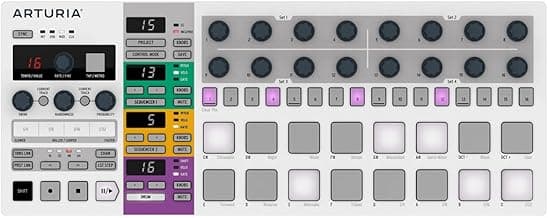
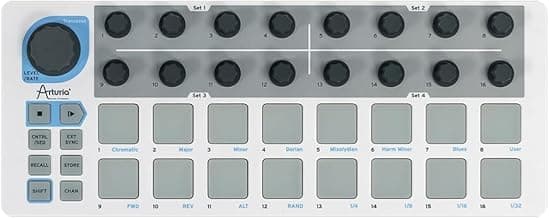
If you prioritize piano-style playing, check out best keyboard music controllers for compact, responsive options.
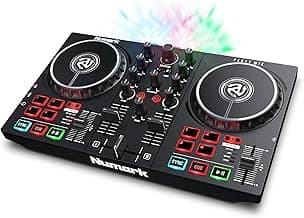
For dedicated turntable-style options and DJ-style scratch interfaces, see best dj game controllers.
Latency, polling rate, and connection
Low latency is critical for rhythm games. Check how the controller connects and whether it supports high polling rates or a reliable wired mode to minimize input delay.
- Wired vs wireless: Wired USB mode generally gives the lowest and most consistent latency—use wireless only if it offers a high-performance mode.
- Polling rate and sampling: Higher polling (e.g., 500–1000 Hz) reduces input lag; some controllers advertise this spec for competitive play.
- Example: If you need a controller with high polling and multiple connection modes, consider the 8BitDo Ultimate 2 (Black), which highlights high-frequency polling and low-latency operation.
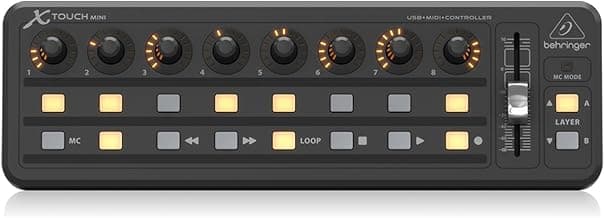
If you're using MIDI devices or USB-MIDI mappings, our best midi game controller guide covers common latency considerations and mapper workflows.
Build quality and component type
Durability matters when you practice frequently. Pay attention to the build materials, switch type, and whether the sticks or pads use hall-effect or long-life sensors.
- Switch & sensor longevity: Hall-effect sticks and high-end microswitches last longer and keep feel consistent over time.
- Frame and buttons: Metal or reinforced plastic frames resist warping; replaceable faceplates and screws make maintenance easier.
- Example: For a controller built to last with robust construction, the CRKD Gibson Les Paul is positioned as a durable, multi-platform option.
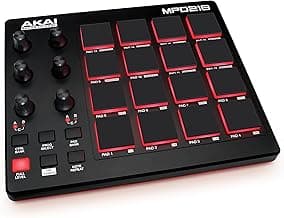
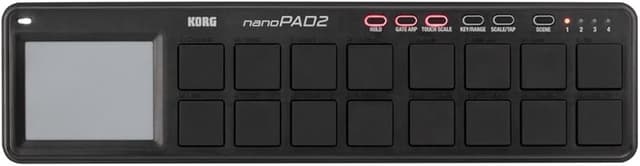
For pad-centric builds with reinforced switches aimed at longevity, consider our roundup of best drum controllers.
Customization, mapping and software support
How easily you can remap inputs, create profiles, or update firmware affects adaptability across versions of beatmania and other rhythm titles.
- On-board remapping: Controllers with hardware-profile save slots let you switch schemes without PC software.
- Vendor software and firmware updates: Regular firmware updates can fix latency or mapping issues and add compatibility.
- Additional controls: Extra knobs, paddles or back buttons allow custom macros or hold functions useful for advanced play.
- Example: If you need deep remapping and a docked/standby workflow for rehearsal, look at controllers like the ManbaOne Interactive Screen Controller, which emphasizes remappable buttons and on-device profiles.
For a broader comparison of remappable devices and their software ecosystems, see our best music game controller guide.
Price, warranty and long-term value
Set a budget and weigh immediate features against durability and upgradeability. A cheaper controller can be fine for learning, but frequent replacements cost more over time.
- Warranty & support: Prefer controllers with clear warranty terms or active manufacturer support—for repairs and replacement parts.
- Resale and upgrade paths: Modular designs or widely supported controllers tend to hold value and are easier to modify later.
- Try before you buy: If possible, test controllers in person to confirm key travel, pad rebound and overall comfort before committing.
FAQ
What's the best controller for beatmania on PC?
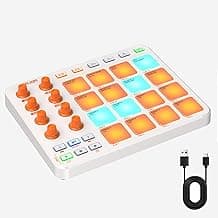
For PC beatmania-style play you want tight input mapping and low latency; many players use compact MIDI or pad controllers because they map easily to the game's keys. A popular compact option is the Akai MPK Mini MK3, which offers responsive keys, backlit pads and easy USB MIDI setup. It’s small enough for desktop use and can be remapped to mimic the beatmania key layout. Make sure your game supports MIDI or use a mapper tool to assign inputs. Check latency settings in your OS and game to reduce input lag.
Can I use a regular Xbox or PlayStation controller for beatmania?
Yes, a standard Xbox or PlayStation controller will work for casual play and some arcade-style ports because most games accept XInput/DirectInput devices. However, those controllers have limited face buttons and can struggle with rapid multi-key presses that beatmania requires. If you want precise timing or need many simultaneous inputs you’ll likely be better off with a controller that offers more buttons or a dedicated MIDI/pad layout. For casual practice or mobile versions, a gamepad is a convenient starting point.
Are wired or wireless controllers better for competitive beatmania?
Wired controllers generally give the most consistent low-latency performance and are preferred for competitive play because they avoid wireless interference and battery issues. Modern wireless controllers with high polling rates can be nearly as responsive—models like the 8BitDo Ultimate 2 Wireless advertise high polling and quality sticks, so they may be fine for serious casual play. If you go wireless, test for any added input lag and use a wired connection for tournaments or record-setting attempts. Prioritize stable connection and reliable button feel above extra features.
Do I need a turntable-style controller for an authentic beatmania experience?
An authentic beatmania IIDX experience includes a turntable and multiple keys, so a turntable-style controller gives the closest feel to arcade cabinets. That said, many players use alternative setups—keyboards, MIDI controllers, or pad controllers—and still enjoy excellent play and high accuracy. DJ-style controllers can add scratching mechanics but aren’t necessary unless you want the full tactile setup. Choose based on how close to arcade feel you need to be and your budget and desk space.
Which controllers hold up best for long practice sessions?
Durability comes down to build quality, reliable switches and comfortable ergonomics for extended use; look for hall-effect or high-quality mechanical inputs if you practice a lot. The CRKD Gibson Les Paul Guitar Controller is noted for robust construction and long-lasting components, though it’s a guitar-style controller suited to certain rhythm games. Brands like GameSir and 8BitDo also offer solidly built controllers with remappable buttons that can survive heavy use. Replaceable parts and good warranty support are helpful if you expect daily multi-hour practice.
Final Verdict
Across our comparison, the top controllers stood apart through low input latency, reliable Hall/TMR sensors or solid sticks, sturdy button feel, and flexible button mapping—weak options fell short on responsiveness, build quality, or platform support. Prioritize low-latency wired/wireless performance, Hall or TMR joysticks, remappable buttons, and comfortable ergonomics for long sessions. The best-performing controllers consistently combined tight timing, durable hardware, and straightforward software mapping—those are the features that deliver repeatable results in beatmania play.
🏆 Best Overall: 8BitDo Ultimate 2 Wireless — TMR Joysticks & Hall Triggers
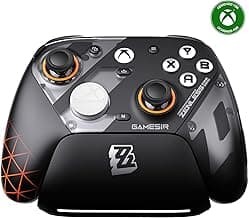
💰 Best Budget: GameSir Tegenaria Lite — Wired Hall Sticks & 1000Hz
⭐ Best Premium: ManbaOne Interactive Screen Wireless — Hall Stick & Dock