
Buying Guide
Power rating and speaker matching
On a tight budget, it's tempting to chase the highest watt number, but matching amplifier power to your speakers and room matters more. Look for an amplifier whose continuous (RMS) output fits your speaker's recommended power range rather than relying on peak or marketing watts. For guidance on matching wattage and amp types, see best power amplifiers.
- Check speaker sensitivity and room size—low-sensitivity speakers and larger rooms need more clean power.
- Prefer slightly more headroom than you think you'll need; under-powered amps can distort at high volume.
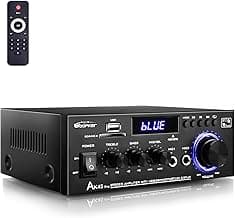
- For many small to medium rooms, compact budget amps like the Joengoep AK50 are often a practical match for bookshelf or small floorstanding speakers. If you're also shopping for speakers, our best budget loud speakers guide covers good matches.
Connectivity and inputs
Being clear about the sources you want to use will save frustration. Basic inputs include RCA and 3.5mm aux; many budget amps add Bluetooth, USB, or optical inputs that expand usefulness without extra gear. If you want a broader overview of models with diverse inputs, consult our best stereo amplifiers guide.
- Prioritize the inputs you actually need (turntable, TV optical, phone Bluetooth) to avoid adapters.
- If you own a turntable look for a phono stage or plan for a separate phono preamp.
- Budget models with a wide input set—such as the versatile Donner MAMP2—can simplify setup and future upgrades.
Controls, tone shaping and usability
Simple tone controls and a straightforward layout make a budget amp easier to live with. Consider whether you want bass/treble knobs, a remote, display, or mic inputs for occasional karaoke or announcements.
- Tone controls let you compensate for room acoustics or speaker balance without EQ gear.
- A remote or front-panel display improves daily usability—especially if the amp will sit near your TV or sofa.
- If you need a subwoofer output or microphone input, confirm the amp offers those before buying.
Size, heat management and build quality
Budget amplifiers range from tiny Class D modules to larger Class AB units. Size affects placement, cooling, and longevity. Better ventilation and a solid chassis help reliability, especially if you plan to run the amp for long sessions.
- Avoid cramped enclosures with poor ventilation if you plan frequent loud listening.
- Metal cases and screw-terminal bindings typically outlast thin plastic housings.
- Compact, efficient models can be great for space-limited setups, but check reviews for real-world thermal performance before buying.
Features, warranty and long-term value
Budget amps can offer surprising features—Bluetooth versions, built-in FM or USB playback, and remote controls. Balance those extras against warranty coverage and brand reputation to get long-term value.
- Consider whether optional features are useful or just add complexity.
- Check warranty length and the seller's return policy—cheap amps can still fail, and a good warranty reduces risk.
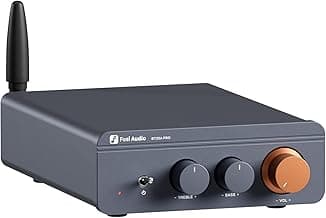
- If you want a compact option with solid efficiency and tone controls, the Fosi Audio BT20A Pro is an example of a budget-aware design that balances features and size.
FAQ
What should I look for when buying a budget stereo amplifier?
Focus on clean power, the number and type of inputs, and overall build quality rather than peak wattage claims. Look for features that match your sources—Bluetooth for streaming, a phono input for vinyl, or a subwoofer output for stronger bass. A compact budget model that covers these basics is the Joengoep AK50, which includes Bluetooth and a subwoofer output for small systems. Also check the return policy and user controls so setup is straightforward.
Can a budget stereo amplifier power bookshelf speakers well?
Yes—budget stereo amplifiers can drive bookshelf speakers effectively in small to medium rooms when matched correctly. Check your speaker’s sensitivity and recommended amplifier wattage instead of relying on peak numbers. Many inexpensive amps provide enough clean headroom for everyday listening, but very large or low-efficiency speakers may need a higher-powered amp or a powered subwoofer. If possible, audition the amp with your speakers to confirm it delivers clean sound at the volumes you want. For options across price points, see best budget amplifiers.
Do budget stereo amplifiers support Bluetooth and modern inputs?
Most budget models now include Bluetooth and a mix of analog and digital inputs, but the exact mix varies by unit. If you need optical or coaxial for a TV, or a dedicated phono input for a turntable, verify those ports before you buy. For example, the Donner MAMP2 offers Bluetooth 5.3 plus optical, coaxial, USB, phono, and multiple aux ports to cover many modern setups. Also check for a remote and USB playback if convenience matters to you.
Will a budget amplifier work for karaoke or a small home theater?
Budget amplifiers can handle casual karaoke and small home theater systems if they include mic inputs and sufficient clean power. Look for units with dedicated mic inputs, basic echo or level controls, and the right digital inputs (optical) for connecting a TV. Many value models, such as Donner and Joengoep, include mic inputs and simple echo features for singing. For home theater, prioritize clean power and the correct inputs over karaoke-specific bells and whistles.
How can I avoid noise, hum, or interference with a cheap amplifier?
Noise and hum usually stem from grounding issues, poor cables, or gain mismatches rather than the amp itself. Use quality shielded interconnects, keep power and signal cables separated, and ensure all components share a common ground. Set source volumes reasonably low and raise the amp’s gain only as needed to minimize hiss, and swap cables or inputs to isolate the problem. If hum persists, test the amp with another speaker or in a different outlet to rule out wiring or unit faults before returning it.
Final Verdict
After comparing the field, the strongest budget stereo amplifiers separated themselves through dependable RMS power, stable Bluetooth and wired connectivity, and straightforward controls—features weaker units trimmed to save cost. Buyers should prioritize consistent power delivery, essential inputs (phono/aux/optical), and build quality over gimmicks. The top performers all delivered predictable output, flexible connections, and simple tone or subwoofer control, which together provide the most reliable long-term value for budget-conscious buyers. For a wider set of recommendations across uses and budgets, see best audio amplifiers.
🏆 Best Overall: Sony STRDH190 2-Channel Receiver with Phono & Bluetooth
💰 Best Budget: Joengoep AK50 2.0-Channel Amplifier with Subwoofer Out & Bluetooth
⭐ Best Premium: AK35 2.0-Channel Mini Bluetooth Stereo Amplifier