
Buying Guide
Suction power and surface compatibility
For budget robot vacuums, suction is one of the biggest determinants of real-world performance. Look at suction reported in pascals (Pa) and match it to your floors: hard floors and low-pile carpet do fine with lower numbers, while homes with pets or thicker rugs benefit from stronger suction and a dedicated brushroll.
- Target range: many effective budget units fall between ~2,000–7,000 Pa; higher numbers can help pick up pet hair.
- Brushes and edges: models with a side brush plus a main brush or tangle‑free intake will clean edges and manage hair better.
- Example: the Tikom G8000 Max advertises higher suction and a mop option (see our best robot vacuums with mop), making it a strong value pick for mixed hard-floor and pet‑hair cleanup.
Navigation, mapping and obstacle handling
Navigation style affects efficiency and how consistently a vacuum cleans. Budget models vary from random bump-and-turn patterns to systematic mapping with LiDAR or camera sensors.
- Random or spiral cleaning can be fine for small rooms but may miss spots in larger layouts.
- LiDAR and mapped navigation enable room mapping, no‑go zones and more predictable coverage—useful in multi‑room homes. See our best smart robot vacuums for mapping-capable budget picks.
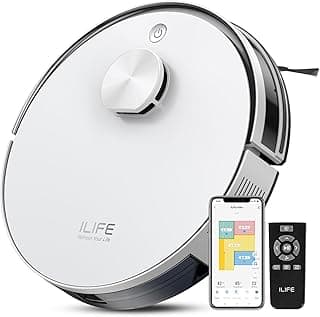
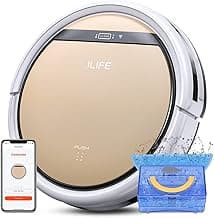
- Example: if mapping is a priority on a modest budget, the ILIFE A30s includes LiDAR navigation and no‑go zone support for cleaner, repeatable routes.
Battery life, runtime and area coverage
Runtime determines how much floor area a robot can cover before it needs to recharge. Look for manufacturers’ runtime claims but also consider recharge behavior—does the vacuum return to base and resume where it left off?
- 120 minutes or more is ideal for multi‑room coverage; shorter runtimes often require returning to base mid‑clean.
- Auto‑recharge and resume features let a robot finish large jobs without manual intervention.
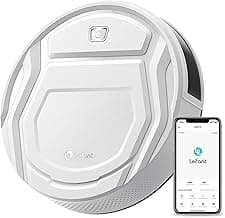
- Example: budget models such as the Lefant M210 Pro list extended run times around 120 minutes, which helps cover apartments and smaller houses in a single cycle.
If you're balancing runtime and price, see our best robot vacuums under $500 for budget models that prioritize longer runs.
Maintenance, filters and long‑term costs
Cheap up front doesn’t mean cheap to own. Check how easy the unit is to maintain and whether replacement parts are widely available and affordable.
- Dustbin size: smaller bins fill faster—look for easy‑to‑empty, washable bins.
- Filters: check whether the unit uses washable pre‑filters and the type of main filter (HEPA vs standard); HEPA or fine‑particle filters are better for allergy sufferers.
- Spare parts: replacement brushes, filters and batteries become a recurring cost—choose brands with common, affordable spares or widespread retailer availability.
If you want even lower upkeep, consider models on our list of best self washing robot vacuums.
Smart features, form factor and noise
Decide which convenience features matter more than raw specs. Wi‑Fi apps, scheduling, voice control and slim profiles can all improve everyday usability even on budget machines.
- App and voice control let you run quick cleans and schedule routines from anywhere, but a simple remote or on‑device controls may be fine for many users.
- Height and bumper design: a slim vacuum reaches under low furniture; reliable cliff sensors prevent stairs accidents.
- Noise: manufacturers’ decibel claims vary—if you plan to run the vacuum while home or overnight, look for models described as quiet in reviews or with lower reported dB levels. See our best quiet robot vacuums for quieter picks.
FAQ
What is the best budget robot vacuum for pet hair?
Many budget robot vacuums handle pet hair well, but the best choice depends on suction and brush design. A strong budget example is Tikom G8000 Max, which advertises 5000Pa suction, app/remote control, and up to 150 minutes runtime. Its vacuum-and-mop combo helps pick up loose fur on hard floors and low-pile carpets. For heavy shedding dogs you may still need occasional manual vacuuming or a higher-powered model.
Can a cheap robot vacuum do both hard floors and low-pile carpet?
Yes — many inexpensive robot vacuums are designed to clean hard floors and low‑pile carpet effectively. Focus on models that list both floor types and offer a decent suction rating and brushroll design to lift debris. For example, the Lefant M210 Pro is marketed as ideal for pet hair and hard floors and lists 2200 Pa suction with 120 minutes runtime. If you have high‑pile rugs or ingrained dirt, a more powerful upright or a premium robot may be a better fit.
How long do budget robot vacuums typically run on a single charge?
Runtimes vary widely across budget models and depend on suction level and active features. Several options in this roundup list runtimes from 120 minutes (Lefant M210 Pro and ILIFE V2) up to 180 minutes (MONSGA), while others like the Tikom and ILIFE A30s list around 150 minutes. Running on max suction or using mapping and mopping features will shorten battery life, while eco modes extend it. Most robots return to the dock to recharge and either resume or end the job automatically.
Do budget robot vacuums offer mapping and app control?
Some budget robots include app control and basic mapping, but full-featured mapping is still more common in higher-tier models. The ILIFE A30s is an example of a budget-friendly model that advertises LiDAR navigation, home mapping, and no‑go zones. Other budget picks may offer app scheduling and remote control without detailed mapping, so check product specs for LiDAR or camera navigation if mapping is important. If you mainly need simple scheduled cleaning, a basic app-enabled model will usually suffice.
What routine maintenance keeps a cheap robot vacuum working well?
Empty the dustbin after each run and clean or replace filters on the schedule recommended by the manufacturer. Remove hair and tangles from the main brush and side brushes, and wipe wheels and sensors to prevent navigation problems. Keep charging contacts on the robot and dock clean and free of debris, and inspect brushes for wear so you can replace them when needed. Regular quick maintenance preserves suction, battery life, and overall reliability.
Final Verdict
Strong budget robot vacuums stood out when they balanced dependable suction, sensible runtime, and straightforward navigation—features that affect daily cleaning more than bells and whistles. Prioritize suction strength, battery life, obstacle handling or mapping for your floorplan, and low-maintenance brushes or tangle-free systems. The best models combine steady cleaning performance, reliable self-charging, and easy app or voice controls so you get consistent results with minimal upkeep.
🏆 Best Overall: Lefant M210 Pro 2200Pa Robot Vacuum
💰 Best Budget: Tikom G8000 Max 5000Pa Robot Vacuum & Mop
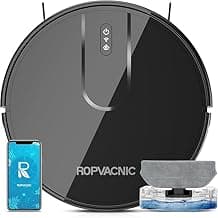
⭐ Best Premium: ROPVACNIC 5200Pa Robot Vacuum & Mop