
Buying Guide
Power and wattage: match output to your room and use
On a budget, more watts don’t always mean better sound—what matters is usable continuous power (RMS), headroom and how loud you need the system to play without distortion. Look for amps that provide consistent power at a realistic impedance and avoid units that advertise only peak power figures. If you need more options focused on raw output, check our best power amplifiers.
- Consider how you’ll use the amp: small bedroom listening needs far less power than a garage party or a passive subwoofer.
- Class D designs are common in budget amplifiers because they deliver higher efficiency and less heat for their size.
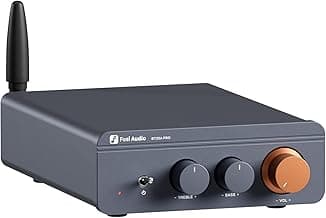
- Example: a compact Class D unit like the Fosi Audio TB10D is marketed as a high-output mini amp—use that sort of model when you want extra headroom without spending on large chassis or heavy transformers.
Speaker compatibility: impedance and sensitivity matter
Before buying, check your speakers’ impedance (typically 4, 6 or 8 ohms) and sensitivity (dB/W/m). Mismatches between amp output and speaker specs are a common source of poor performance or overload. If you're shopping for speakers on a budget, our best budget loud speakers guide helps match sensitivity and power.
- If your speakers are low-impedance (4Ω), choose an amp rated to drive that load stably.
- Sensitivity tells you how loud a speaker will be for a given power level—low-sensitivity speakers need more watts.
- Small 12V or desktop amps can be ideal for efficiency-focused speakers and compact setups; for example, the compact Kinter MA170 works well with many bookshelf and car-style speakers where 12V operation and modest power are sufficient.
Connectivity and features: prioritize what you’ll actually use
Budget amplifiers vary widely in inputs and extras. Decide whether you need Bluetooth, USB/SD playback, a dedicated subwoofer output, or mic inputs before shopping—extra features can add value but also complexity.
- Bluetooth is convenient for phones and tablets; look for Bluetooth 5.0 or higher for more reliable pairing in a noisy environment.
- Subwoofer outputs or a dedicated LFE channel are useful if you plan to add a powered subwoofer later.
- If you enjoy tinkering or building DIY systems, very inexpensive boards with onboard Bluetooth and tone controls can be a cost-effective option—an example is the budget Bluetooth 2.1 Power Amplifier Board which includes bass/treble controls and a subwoofer channel. If you prefer a conventional two-channel setup for music, consider browsing our best budget stereo amplifiers.
Size, cooling and power supply requirements
Budget amps are often compact, but small packages can struggle with heat under continuous load. Check cooling provisions and whether the amp needs an external DC supply or an internal AC adapter. Portability and installation constraints (rack space, shelf depth, car use) will influence what form factor you choose.
- Class D amps typically run cooler and are more compact than traditional Class AB units.
- If you plan to drive the amp hard, look for models with heatsinks, vents or a fan to avoid thermal cutoff.
- Verify the required power source—12V units are common for car or compact systems, while home models usually include an AC adapter or internal supply.
Controls, usability and long-term reliability
Ease of use and durability are key on a budget. Simple, well-labeled controls, a remote (if desired) and a solid chassis go a long way. Read reviews for long-term reliability—cheap components can produce audible noise, loose connections or premature failure.
- Physical knobs for volume and tone are quicker to adjust than hidden menus; a remote or front-panel display is a bonus for living-room use.
- Look for models with protective circuitry (short-circuit, thermal, DC protection) to safeguard speakers and the amp itself.
- When possible, favor brands or listings with clear specs, return policies and strong user feedback—those signals often matter more than slightly lower price tags when buying a budget amplifier.
FAQ
What should I look for when buying the best budget audio amplifiers?
Prioritize power (watts per channel) that matches your speakers, speaker impedance compatibility (typically 4–8 ohms), and available inputs like RCA, AUX, or Bluetooth. Look for decent heat dissipation and a compact footprint if you’ll place it near other gear. A simple, reliable example to try is the Kinter MA170, which is inexpensive and easy to set up for basic systems. Don’t expect audiophile-grade components at budget prices, but many budget amps offer surprisingly clean sound for casual listening.
Can cheap amplifiers drive bookshelf speakers without damaging them?
Yes—cheap amps can safely drive bookshelf speakers if you match power and impedance and avoid clipping the amp. Check speaker sensitivity (dB) and choose an amp that provides modest headroom rather than maximum wattage, since clipping is more harmful than using lower volume. Keep volumes reasonable and listen for distortion; if sound distorts at high volumes, back off immediately to prevent damage. For most home uses, a well-matched budget amp gives plenty of clean output.
Are Bluetooth budget amplifiers good enough for music and TV?
Bluetooth in budget amps is convenient and fine for casual listening and TV if your source and amp support low-latency codecs or you don’t mind slight sync delay. Wired connections (RCA, optical) still provide the most consistent, lowest-latency performance for movies and gaming. If you want a compact Bluetooth option for music, consider a small, affordable unit like the AK35 which balances size, Bluetooth 5.0, and basic tone controls. Always test for lip-sync and switch to wired when watching fast-action video. If a TV-centered, all-in-one solution is preferred, our best budget soundbar guide covers compact options optimized for video.
How many watts do I need from a budget amp for a small room?
For a typical small room, 20–50 watts per channel into 8 ohms is usually enough for comfortable listening at moderate volumes. Speaker sensitivity matters more than raw wattage—high-sensitivity speakers need less power to get loud. If you want extra headroom for occasional loud listening, aim higher or choose an amp with conservative ratings you can run below maximum output. A flexible DIY-friendly option with subwoofer support is the compact 2.1 amplifier board that provides separate bass output for fuller low end.
Will a budget amplifier last or should I plan to upgrade quickly?
Budget amplifiers can last many years if you avoid constant maxed-out volumes, ensure proper ventilation, and use reliable power sources. Expect simpler build quality and fewer protection features than pricier amps, so choose units with good user reviews and basic protections. Upgrading usually makes sense when you want better tonal fidelity, more inputs, or stronger power handling for larger speakers. For most casual listeners, a well-chosen budget amp is a cost-effective long-term solution.
Final Verdict
After comparing many budget amplifiers, the winners separated themselves by delivering clean, stable power, low audible noise, and useful connectivity without unnecessary extras. Prioritize matching amplifier power to your speakers, reliable Bluetooth or wired inputs, thermal protection, and simple bass/treble controls. The best-performing models shared consistent, distortion-free output, easy-to-use controls, and solid build quality—real-world performance and reliability matter more than headline wattage on the spec sheet. For a broader comparison across categories and price points, see our best amplifiers guide.
🏆 Best Overall: Kinter MA170 12V 2 Channel Mini Digital Audio Amplifier
💰 Best Budget: Bluetooth 2.1 Channel Power Amplifier Board 50W×2+100W
⭐ Best Premium: Joengoep AK50 2.0 Channel Home Audio Amplifier with Bluetooth