
Buying Guide
Match power and purpose
Wattage matters, but more important is matching the amp's power to what you'll actually use it for. Small, low-watt amps (10–50W) are great for bedroom practice, personal listening, or driving small bookshelf speakers without disturbing others. Larger wattages are useful for home parties, garages, or driving inefficient speakers.
For instrument practice, compact models like the Fender Frontman 10G demonstrate how a modest 10W unit can still deliver usable volume and tone control for close-range use. When comparing specs, focus on RMS (continuous) power rather than peak numbers—RMS better reflects real-world performance. If you need higher output for parties or PA use, see our guide to best power amplifiers.
Connectivity and inputs
Consider how you'll feed the amp: Bluetooth, RCA, AUX, USB, microphone inputs, or dedicated subwoofer outputs all affect flexibility. If you plan to stream from a phone, Bluetooth is convenient; for a home stereo with multiple sources, look for RCA and optical inputs.
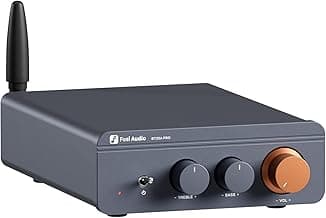
Mini Class D units such as the Fosi Audio BT20A show how a budget amp can still offer Bluetooth and stereo RCA inputs for passive speakers, making them versatile for indoor or small outdoor setups. For other low-cost models that balance inputs and sound quality, check our roundup of best budget audio amplifiers.
Size, placement and power supply
Think about where the amp will live. Shelfable receivers and desktop amps prioritize convenience and easier ventilation, while compact boards and modules suit DIY speaker projects or tight spaces. Also check whether the amp needs a wall adapter, DC input, or standard IEC power cord.
If you want a board-style amp for building into a cabinet or a custom enclosure, compact modules like the ZK-1002T amp board save space and often run on 12–24V supplies—handy for portable or automotive installs. For portable speaker pairings and battery-powered setups, our guide to best budget portable loud speakers can help you choose compatible drivers.
Sound quality and speaker pairing
Good budget amps can sound excellent when paired with the right speakers. Match speaker impedance (ohms) to the amp’s rated load, and aim for speakers with reasonable sensitivity (dB/W/m) to get more volume from less power. If you have passive subwoofers, check for a dedicated sub output or preamp out to add one later.
- Impedance: Most home amps expect 4–8 ohms—confirm compatibility before connecting.
- Sensitivity: Higher sensitivity speakers need less power to reach the same loudness.
- Tone controls: Built-in bass/treble lets you tailor sound without external EQ.
If you're choosing speakers to match an amp, our best budget loud speakers guide highlights efficient models that pair well with low- to mid-powered amplifiers.
Features, reliability and budget trade-offs
Budget amps trade off premium components for lower prices, but you can still find durable units with useful extras—remote control, FM/USB playback, microphone inputs, and basic tone controls. Prioritize features you'll use regularly rather than a long checklist of bells and whistles.
Also check warranty and user reviews for reliability clues. Cheap amps with solid customer feedback and clear return policies often provide better real-world value than unknown brands with flashy specs.
FAQ
What should I look for when buying a budget amplifier?
Prioritize RMS power that matches your speakers and the amp’s rated impedance so you don’t under- or over-drive them. Look for useful inputs like Bluetooth, RCA, and AUX that fit how you’ll listen, plus basic tone controls if you want to shape sound. Check build quality, cooling vents, and user reviews for reliability at the price point. Finally, confirm return policy or warranty—those protect you if the amp fails early.
Are cheap amplifiers reliable enough for home audio?
Many low-cost amps use modern Class D designs that are efficient and perfectly fine for casual home use. Expect modest power and simpler feature sets compared with higher-end units, and avoid running them at maximum volume for long periods. Read verified user reviews and listen for reports of overheating, noise, or distortion before buying. A sensible return policy or warranty is especially important with budget gear.
Can a budget amp drive outdoor or garage speakers?
Yes — but choose an amp with enough continuous power for your speakers and efficient Class D circuitry to handle long sessions without wasting energy. Make sure the amp’s impedance rating matches the speakers, and mount the electronics in a weatherproof enclosure if they’ll be exposed to moisture. Use heavier-gauge cabling for longer runs and keep volume headroom to avoid clipping. If you need true outdoor durability, pick weather-rated speakers rather than relying on the amp alone.
Which budget amplifier is best for karaoke and mic inputs?
For karaoke look for units with dedicated mic inputs, echo control, and simple EQ so voices sit clearly in the mix. Many inexpensive amplifiers include USB/SD playback and Bluetooth for backing tracks, which makes setup easier. A solid, affordable example is the Moukey MAMP1, which offers mic support and echo on a compact chassis. Always test mic gain and echo in-store or check reviews to ensure voice clarity before you commit.
How do I match a cheap amp to my speakers to avoid damage?
Start by matching the amp’s RMS output per channel to the speaker’s recommended power range and make sure impedance (usually 4–8 ohms) lines up. Avoid cranking the amp into clipping—distorted sound at high volume is what usually damages speakers, not moderate clean power. Ramp volume slowly when trying a new amp and listen for rattles, distortion, or overheating. If in doubt, choose an amp with slightly more clean headroom rather than one that barely meets the speaker’s minimum.
Final Verdict
After testing the field, the strongest budget amplifiers stood out for reliable power delivery, low noise, and flexible inputs—those factors beat flashy extras. Buyers should prioritize usable RMS power, solid input options (Bluetooth, RCA, USB), thermal stability and simple tone controls so the amp matches your speakers without hiss or clipping. The best-performing amplifiers shared rugged builds, clear controls and consistent, distortion-free output at practical listening levels. For two-channel setups and imaging, see our picks for best stereo amplifiers.
🏆 Best Overall: Fender Frontman 10G Guitar Amp 10W
💰 Best Budget: Moukey MAMP1 Stereo Amp 25W x2 RMS Bluetooth
⭐ Best Premium: Fosi Audio BT20A Pro TPA3255 2-Channel Class D Amp