
Buying Guide
Jaw design and clamping stability
For stone setting you need a vise that holds work rigidly without marring the piece. Look for a self-centering or precision-machined jaw, a positive clamping action, and the option to use soft jaw inserts or pins to protect metal and stones. Vises with a secure pin-plate system make it easier to position settings without slipping. See our best engraving setting tools roundup for models with robust pin-and-plate systems and accessory kits.
- What to check: jaw shape (flat vs V-groove), presence of soft jaw options, and how the vise locks down under torque.
- Example: If you often set tiny stones or need repeatable, secure holding in awkward orientations, a purpose-built peg clamp like the Universal Peg Clamp Work Holder is worth considering for its focused clamping approach.
Size, rotation and precision control
Ball vises come in different ball diameters (commonly 3" and 5") and offer 360° rotation with varying degrees of fine control. Smaller balls are lighter and take up less bench space, while larger bases give more reach and leverage. A functional rotation brake or indexing mechanism helps hold a chosen angle for delicate setting work. For models focused on smooth turning and wide-angle indexing, check our best 360 degree ball vises guide.
- What to check: ball diameter that fits your bench, presence of a rotational brake, and how smoothly the unit rotates under load.
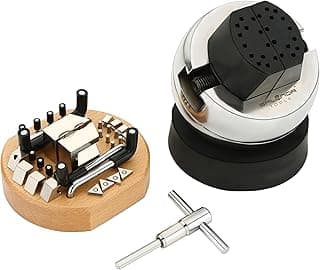
- Example: For a good balance of bench footprint and control, many setters prefer compact 3" models such as the Ball Vise 3-inch (Best Overall), which combine everyday usability with enough range for most stone-setting tasks.
Attachments, pins and jaw options
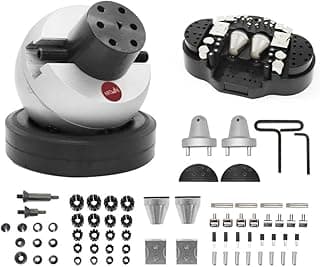
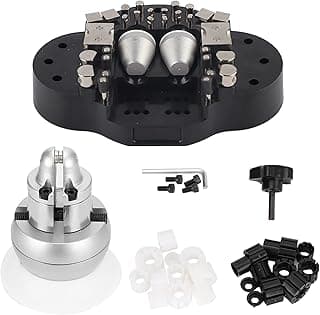
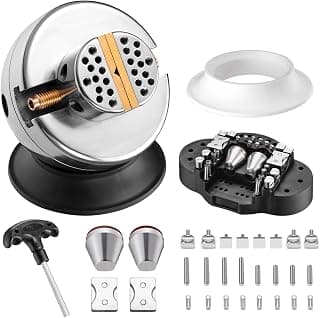
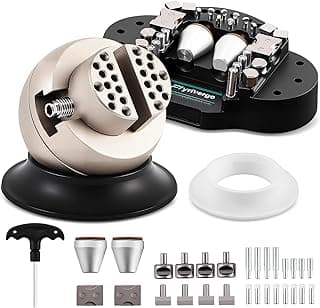
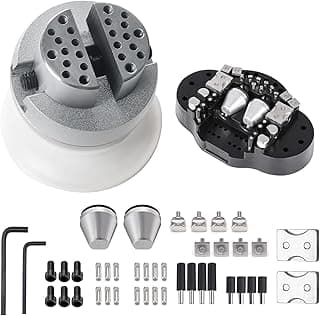
The number and variety of pins, plates and interchangeable jaws determine how flexible your vise will be across different jobs. Sets that include a range of pin sizes, tapered pins, and specialty plates let you adapt the vise for rings, bezels, inlays and odd-shaped pieces without improvising a makeshift clamp. For sets with extensive accessories, see our best jewelry engraving ball vises roundup.
- What to check: included pin sizes, availability of spare plates or extra jaws, and whether the accessories are standard sizes so you can buy replacements.
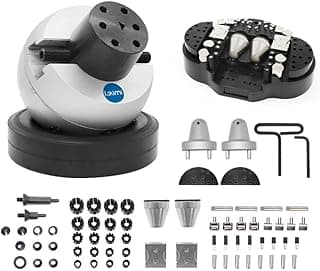
- Example: If you need lots of holding options in a compact package, look at models that ship with extensive accessory kits like the Lakimi 3-inch Compact Ball Vise.
Build quality and materials
Durable materials and tight machining reduce flex and wear over time. Stainless or hardened alloys, precise threads on clamping screws, and well-finished jaws minimize damage to work and keep alignment true. For professional shops, invest in tools where replacement parts are available to extend service life. We review durable options in our best jewelers ball vises article.
- What to check: visible machining quality, material finish (resistance to rust and scoring), and whether the manufacturer offers replacement jaws or pins.
- Avoid: thin cast parts or loose tolerances—these lead to vibration and slippage when setting stones.
Mounting, workspace fit and ease of use
Decide how you’ll mount the vise—clamp-on, bolt-down base, or portable hand-held—based on your bench setup and whether you need to move the tool frequently. Also consider throat depth, how the vise interferes with lights or microscopes, and whether controls are reachable when you’re in a working position.
- What to check: clamp vs base mounting, how much bench space the ball occupies, and whether the vise allows comfortable hand access around the piece.
- Tip: If you work at multiple benches or do on-site repairs, a compact clamp-style or lightweight 3" ball vise will be easier to move than a bolted 5" base model.
FAQ
What is the best ball vise for stone setting?
For most hobbyists and small-studio professionals a well-balanced vise with good accessories and smooth rotation is the best choice. The Ball Vise Engraving Setting Tool (3") is a popular all-around pick because it combines 360° rotation with a set of interchangeable pins and plates that make positioning stones easier. Look for a vise that feels solid on the bench, has a reliable locking mechanism, and includes enough attachment options for different stone sizes. If you plan heavier metalwork, consider stepping up to a 5" model for added reach and stability.
Do I really need a ball vise for stone setting or will a regular clamp do?
A regular clamp can hold pieces, but a ball vise gives far better control for fine stone setting because it rotates and tilts to expose the setting from any angle. That rotation reduces awkward hand positions and helps you keep a steady tool approach when setting tiny stones. Ball vises also use pins and plates to support odd shapes and fragile pieces without crushing them. If you set stones regularly, a ball vise is worth the investment for speed and precision.
What size ball vise should I choose for small stones versus larger pieces?
Choose a compact 3" ball vise for small stones and delicate work where visibility and fine control matter most. A 5" ball vise offers a longer throat and more leverage, which is helpful for larger settings, heavier metal, or when you need extra reach from the bench. Consider your bench space and the typical size of pieces you make—smaller vises are easier to store and move, while larger ones add stability. If you work across sizes, a mid- or large-sized vise with a set of small pins balances versatility and support.
How can I protect delicate stones from damage while using a ball vise?
Protect stones by using the correct pins and plates rather than clamping directly on the gem—soft or padded jaw covers, leather or rubber strips, and small pin supports will distribute pressure. Apply only the minimum clamp force needed to hold the piece steady and test the grip before you start setting. For very fragile stones, use temporary supports like a thin shim or masking tape under the stone to prevent slipping. Regularly inspect contact points for rough edges and replace or pad them as needed to avoid scratches.
What maintenance keeps a ball vise running smoothly and accurate for stone setting?
Clean debris and filings from the rotating joint and attachment plates after each session to prevent grit from affecting movement. Lightly lubricate the pivot and screw threads with a machine oil recommended for fine tools, and check fasteners periodically to ensure nothing has loosened. Store the vise in a dry place to avoid corrosion and keep spare pins and plates organized so you can swap them quickly. If you want an easy-to-use option when starting out, consider the VEVOR 5" Ball Vise (Best for Beginners) as an example of a model designed for approachable setup and maintenance.
Final Verdict
After comparing the line-up, the strongest ball vises stood out for stable bases, precise 360° rotation, and useful attachment sets that improve repeatability and control during stone setting. Prioritize secure clamping, smooth indexed rotation with a dependable locking brake, and a generous selection of pin plates or jaws to cover different stone sizes. The top performers combined solid build quality with intuitive adjustments and comprehensive accessories, which deliver consistent, fatigue‑reducing control for both quick settings and detailed work. If you want a deeper look at different rotation mechanisms, our best rotating ball vises guide compares brakes and pivots.
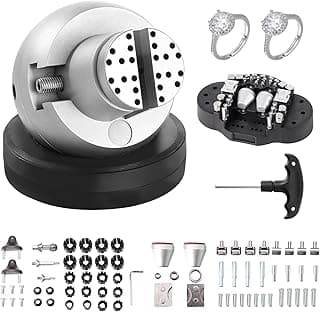
🏆 Best Overall: Ball Vise Engraving Setting Tool 3in, 360° Rotation, 30-Piece
💰 Best Budget: Universal Peg Clamp Work Holder Vice with 8 Pins
⭐ Best Premium: Podoy Ball Vise 3in Jewelers Engraving Block, 35-Piece