
Buying Guide
Power, wattage, and speaker matching
Start by matching an amplifier's continuous (RMS) power to your speakers and listening needs. Look at RMS power per channel at the speaker impedance you plan to use (4Ω vs 8Ω). More watts mean more clean headroom for dynamic peaks, but oversized amps can still be safe if you drive speakers within their limits. If you need amp-buying comparisons focused on output and headroom, see best power amplifiers.
- Check your speakers' RMS rating and impedance, then choose an amp with similar or slightly higher RMS power per channel to avoid clipping.
- For typical bookshelf or small floorstanders, a compact amp that delivers 50–150W per channel into 8Ω is often enough for home listening — for model recommendations in this range, see best stereo amplifiers.
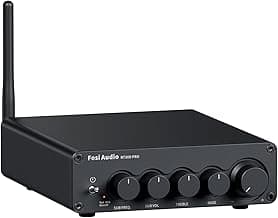
- If you need a portable, space-saving solution with respectable power, consider the Fosi BT20A, which balances compact size with useful output for indoor/outdoor setups.
Connectivity and streaming options
Decide which inputs and wireless protocols you need. Basic setups require RCA or 3.5mm aux inputs, while modern systems often include Bluetooth, AirPlay, Chromecast, or HDMI for TV/ARC passthrough. Multiroom and voice-control options are helpful if you plan to integrate the amp with a smart home. For an overview of top choices across price points, start with our best amplifiers guide.
- Bluetooth is handy for ad-hoc streaming from phones; AirPlay or Chromecast are better for higher-quality, multiroom setups.
- If you connect a TV or game console, look for HDMI ARC/eARC or optical inputs to avoid audio-visual sync problems; for integrated TV audio solutions see best soundbar.
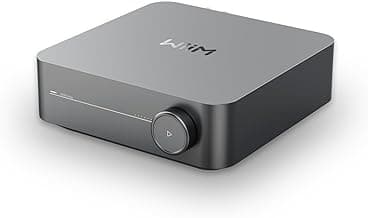
- For networked streaming and voice assistants, the WiiM Amp is an example of a streaming-focused amplifier that supports AirPlay, Google Cast, and Alexa.
Amplifier class, efficiency, and sound considerations
Different amplifier classes (A, AB, D) impact efficiency, heat, and sonic character. Class D amps are compact and very efficient, making them ideal for small enclosures and continuous use. Class AB models can offer a different midrange character and sometimes lower distortion at certain listening levels.
- Choose Class D for compact setups, outdoor use, or when heat and power draw matter.
- Choose Class AB if you prioritize a specific tonal character and you have space for larger heat sinks.
- Listen when possible: specs tell part of the story, but tonal balance and low-level detail are best judged by ear or trusted reviews.
Form factor, cooling, and installation
Consider the physical size, mounting options, and cooling requirements. Mini amps are great for desktops, garages, or bookshelf systems; rack-mount or multi-zone amps fit commercial or multi-room installs. Ensure there’s adequate ventilation around the amp and check the power supply requirements (12V vs dedicated 48V supplies for some Class D chips).
- For DIY or custom builds, a compact amplifier board can simplify installation while saving space. The ZK-1002T is an example of a small amp board suited to hobbyist projects. If you're on a tight budget, check our best budget amplifiers roundup for low-cost, reliable options.
- If you plan to mount in an enclosed cabinet, factor in forced ventilation or leave ample clearance for heat dissipation.
- For multi-room or permanent installs, look for models with zone outputs, balanced inputs, or 70V/100V support as needed.
Features, user interface, and future-proofing
Think about control, inputs, and extras you’ll actually use. Remote control, tone controls, subwoofer outputs, mic inputs for karaoke, and onboard DAC quality can all influence satisfaction. Prioritize features that match your listening habits rather than every checkbox on the spec sheet.
- If you stream from multiple services, prioritize network streaming and compatible app ecosystems.
- If you’ll add a subwoofer, a dedicated sub-out with adjustable crossover is helpful.
- Consider warranty, customer support, and accessory availability (replacement power supplies, mounting kits) to keep the system usable long-term.
FAQ
What are the best audio amplifiers for home use?
For most home setups you want a compact, reliable amp with Bluetooth and enough clean power for your speakers. A popular all-around choice is the Fosi Audio BT20A, which balances size, connectivity and value. Look for Class D designs for efficiency and low heat if you need a small footprint. Match the amp to your room size and speaker sensitivity rather than chasing raw wattage numbers.
How do I choose the right amplifier for my speakers?
Start by checking your speakers' impedance and recommended power range, then pick an amp that can safely deliver power within that window. Consider features you need—Bluetooth, subwoofer output or tone controls—so the amp fits your listening habits. If you want low noise and compact size, Class D amps are a good option; if you need multiple inputs or mic support, look at receiver-style units. Finally, read reviews and listen if possible to ensure the amp's sound matches your taste.
Are Bluetooth streaming amplifiers worth it?
Yes, Bluetooth and network streaming amps are convenient for wireless playback and eliminate the need for extra source components. If you want multiroom or voice control, a streaming-focused unit like the WiiM Amp supports AirPlay, Google Cast and assistants for easy integration. For single-room listening Bluetooth alone is often enough and keeps setup simple. Consider the codecs and network features you need to avoid surprises with quality or compatibility.
Can a cheap amplifier damage my speakers?
A low-cost amp won't automatically damage speakers, but clipping from pushing the amp beyond its limits can cause harm. Keep gain and volume within reasonable levels, and match the amp's power and impedance to your speakers to reduce risk. Look for amps with basic protection features and avoid long periods of distorted output. If you plan to drive large or low-sensitivity speakers, consider a higher-quality or higher-powered amp instead of relying on a budget unit alone.
What's the difference between an amplifier and a receiver?
An amplifier's sole job is to boost audio signals to drive speakers, while a receiver combines an amplifier with tuners, inputs, and processing for multiple sources. Receivers often include radio, multiple inputs, mic connections and features for karaoke or commercial use, making them more of an all-in-one control center. If you only need to power passive speakers from a single source, a standalone amp keeps things simpler and more compact. Choose a receiver when you want extra inputs or features; pick an amp when you want straightforward amplification with better space efficiency.
Final Verdict
After comparing the field, the strongest audio amplifiers separated themselves by delivering consistent, clean power, low noise, and practical connectivity rather than flashy specs. Buyers should prioritize power that matches their speakers, solid input options (Bluetooth, RCA, HDMI or 70V where needed), and a reliable power supply with straightforward controls. The best-performing amplifiers shared the same traits: stable output under load, versatile inputs, simple setup, and durable build quality.
🏆 Best Overall: Fosi Audio BT20A Bluetooth 2-Channel Amplifier
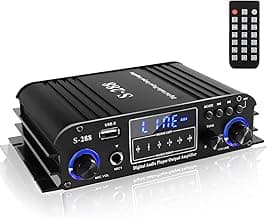
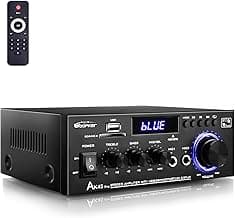
💰 Best Budget: Daakro AK45 2-Channel Bluetooth Amplifier
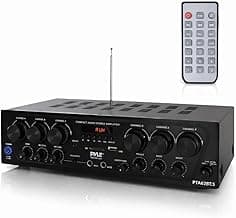
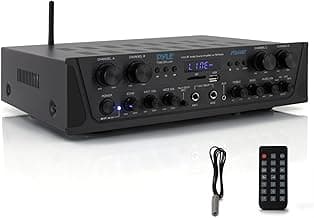
⭐ Best Premium: Pyle 4-Channel Audio Amplifier with Bluetooth